Current Research:
Families, Housing, and Peri‑Urban Societies:
Homeownership and Life in the
Enduring Incompleteness of
Chennai’s Agrarian Urban Edge
Presented at:
The University of Cambridge's Lab for Interdisciplinary Spatial Analysis, who hosted the European Network for Housing Research (ENHR) workshop titled"Families, Housing, and the Asset Society" on June 5, 2026
The American Association of Geographers 2026 Annual Meeting in San Fransisco, California, on March 18th, 2026
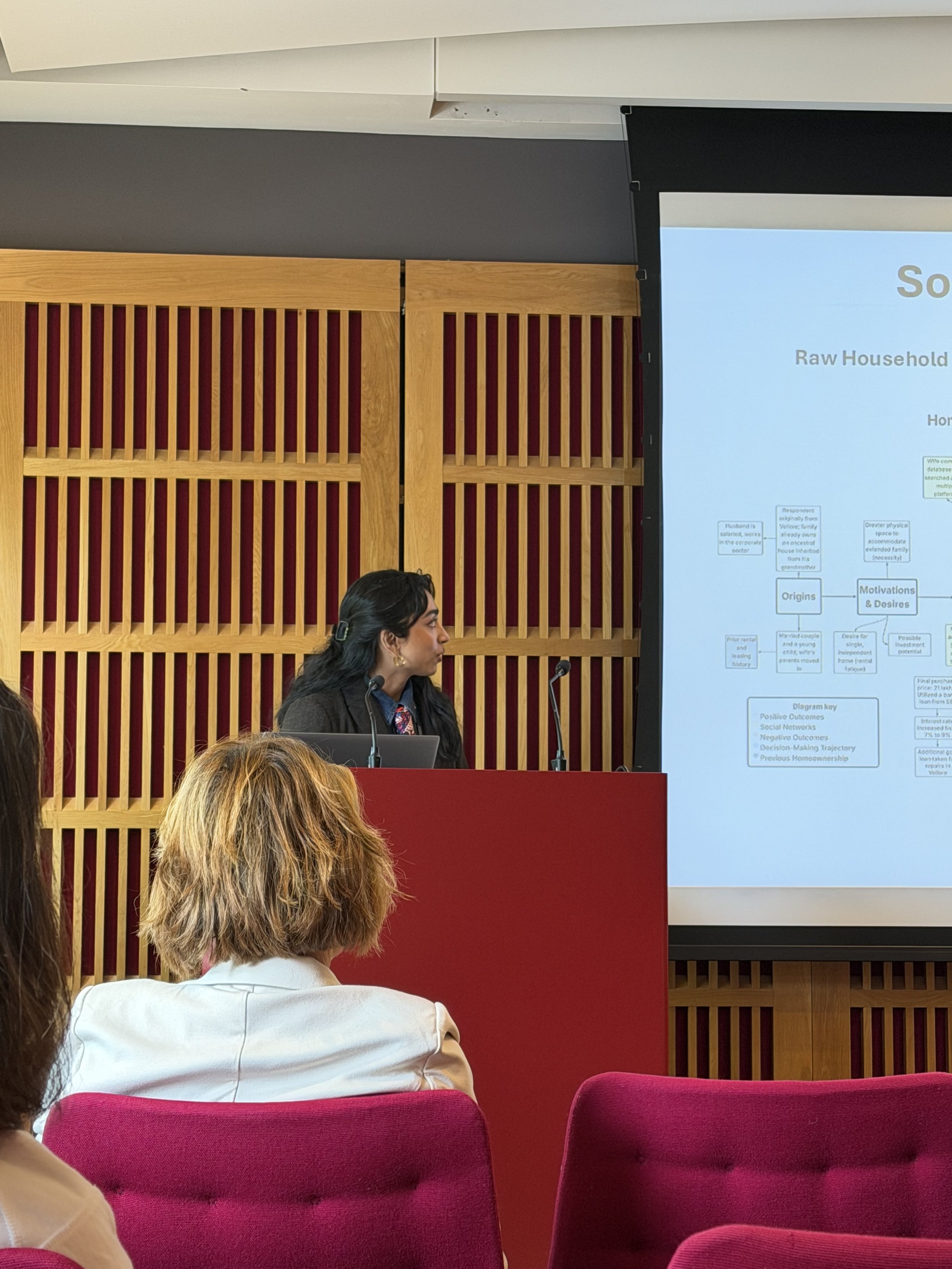
This research, which was led by Dr. Ramya Ramanath of DePaul University examines how first-time, low- to middle-income homeowners in Chennai's urbanizing agrarian periphery form and justify ownership decisions amid infrastructural incompleteness. Drawing on 50 semi-structured interviews across three districts, it traces household pathways through mind-mapping methods, revealing how families co-produce homeownership—and quietly reorganize inequality—under conditions of incomplete urbanization. I was responsible for the data analysis portion of this work; utilizing iterative mind-mapping to visually map the entire decision-making pathway of homeowners and convert this data into a coding matrix that allowed us to visualize patterns across homeownership trajectories.
This work is part of an ongoing study; findings are currently under review for academic publication.
Graduate Thesis
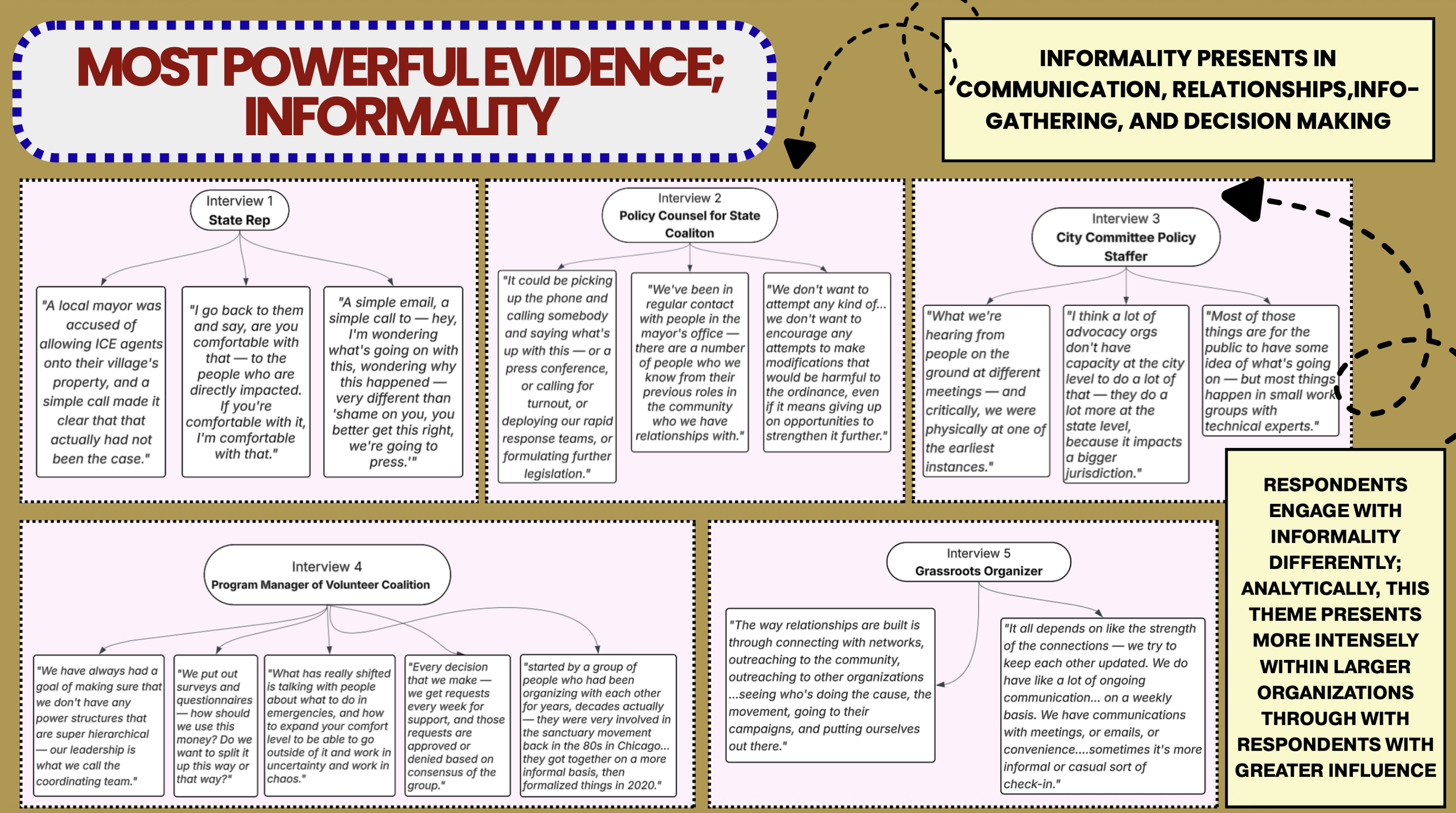
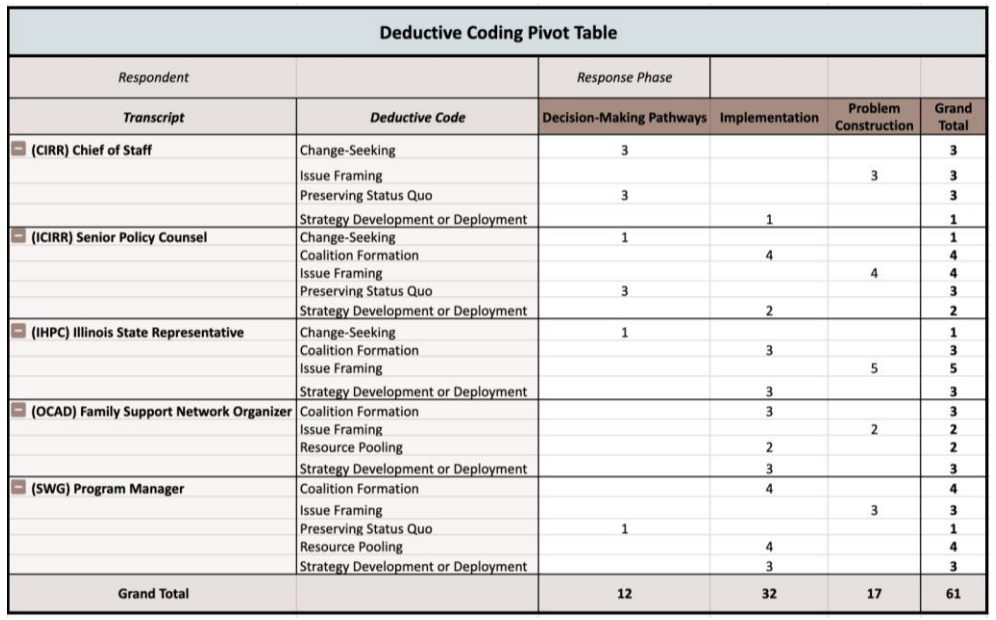
A Peculiarity of Iterative Informality; How Chicago's Advocacy Coalitions respond to implementation gaps in its Municipal Sanctuary Ordinance
I set out to understand how Chicago's advocacy coalitions respond when the city's Municipal Sanctuary Ordinance fails in practice. Through interviews and content analysis, I uncovered "iterative informality"—unwritten, relational practices quietly animating formal coalition response. My findings reject the assumption that coalition action is purely formalized, revealing a nonbinary, layered reality instead.
Quantitative Research:
Shaping Air Quality in Montana; Assessing for Social, Economic, and Environmental Predictors of PM 2.5
I investigated whether nature-sector employment predicts PM2.5 concentrations across Montana counties. Using regression analysis with five controls, I found only a marginal, statistically insignificant relationship—population density and manufacturing employment proved stronger predictors. Findings suggest air quality disparities are shaped more by density and industry than by rural agricultural work itself.
Policy Analysis:
A Call Coming from Inside the House; Procurement Accountability in Chicago’s Sanctuary Contracts
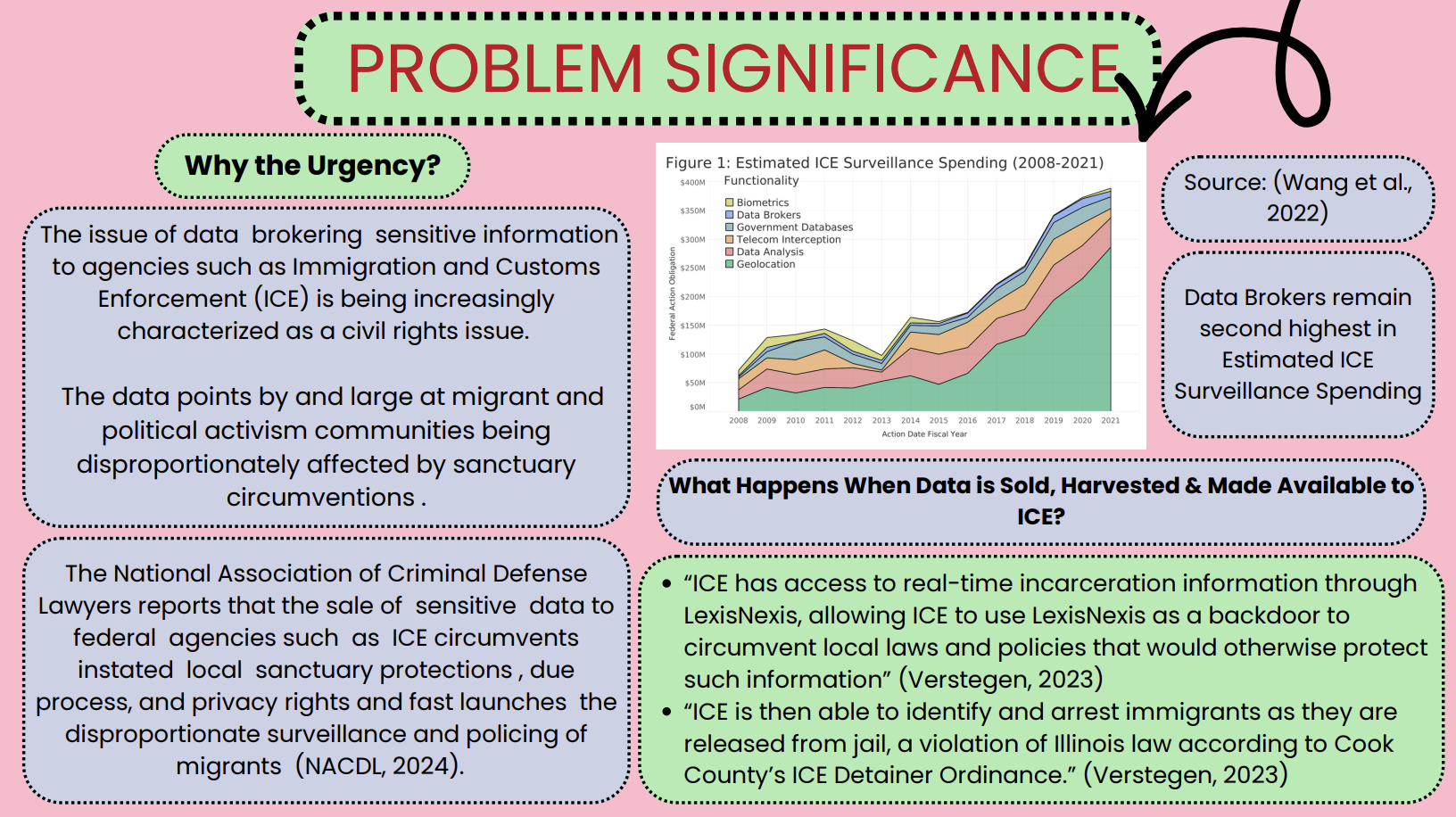
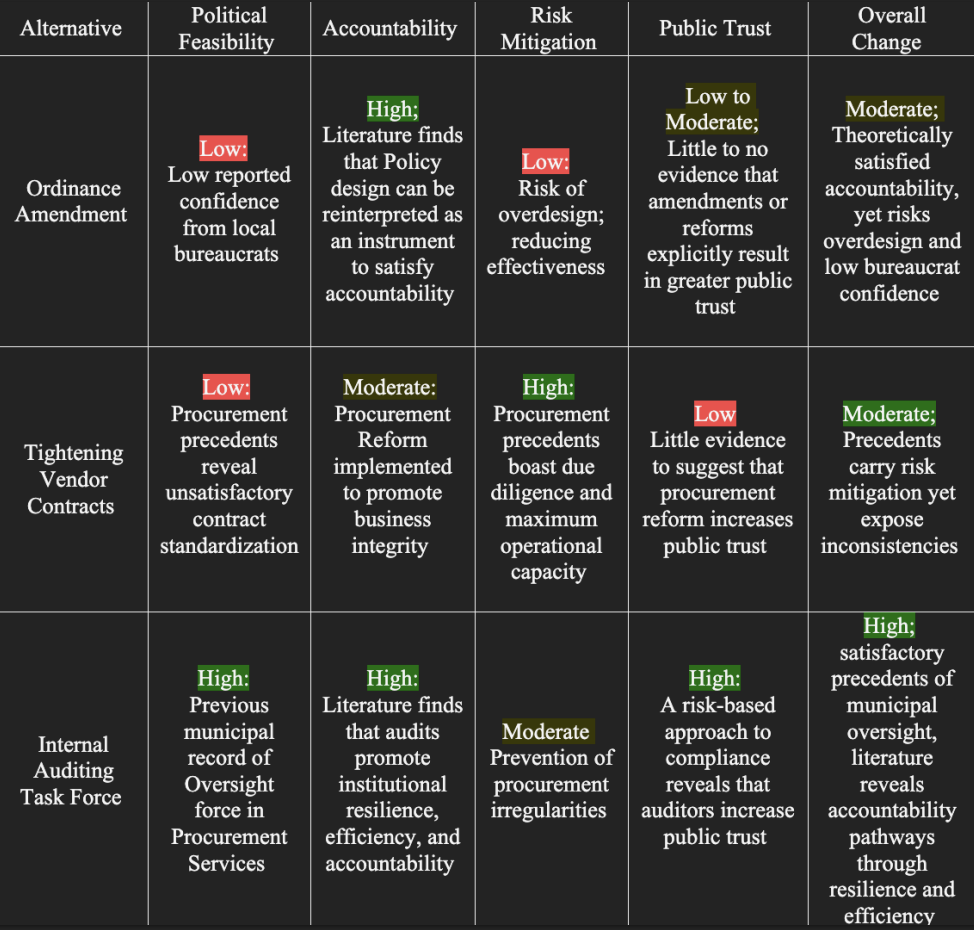
I examined how Chicago's Municipal Sanctuary Ordinance fails to protect migrant data privacy, exposing a legislative loophole that lets vendors like Lexis Nexis broker sensitive information to ICE. Applying Bardach's Eightfold Path, I evaluated policy alternatives and recommend tightening contractual provisions alongside establishing an independent procurement audit task force.